
Wine Colour Analysis using Alpha UV-Vis Spectrophotometry
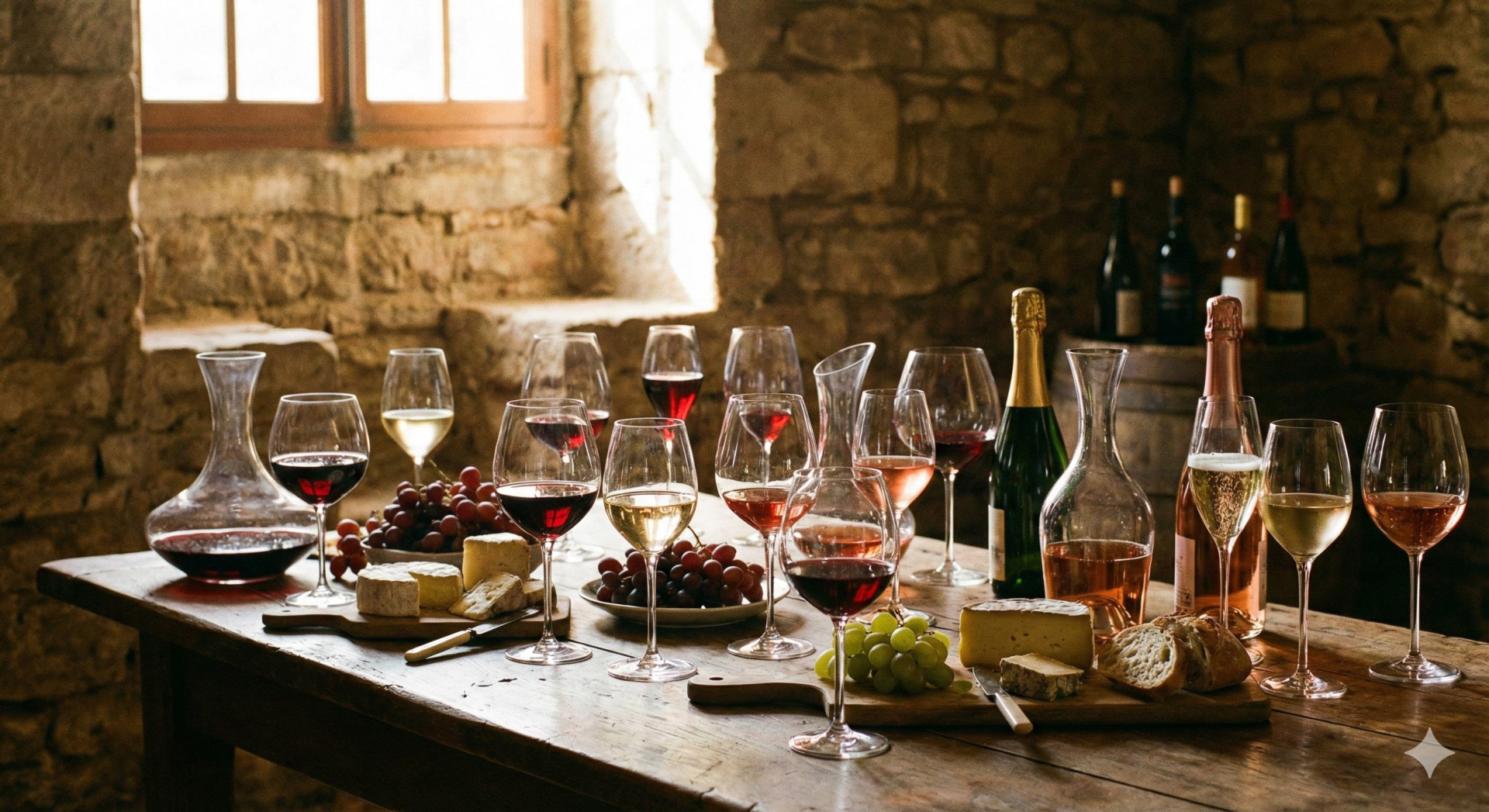
Colour is one of the most important parameters to analyse wine quality. The presence of anthocyanin pigment is responsible for the richness of colour in red wine. The change in the structure of anthocyanin is generally attributed towards the apparent change in colour in red wines. White wines and rose wines also go through colour change due to oxidation of tannins over time. Sometimes defective fermentation process also results in bacterial growth leading to contamination and consequent colour change. UV-vis spectroscopy is a non-destructive technique which does not interfere with the physical and chemical characteristics of wine samples. It is generally used to measure the colour intensity and wine hue to determine quality.
Introduction
Colour is one of the most important parameters to analyse wine quality. The presence of anthocyanin pigment is responsible for the richness of colour in red wine. The change in the structure of anthocyanin is generally attributed towards the apparent change in colour in red wines. White wines and rose wines also go through colour change due to oxidation of tannins over time. Sometimes defective fermentation process also results in bacterial growth leading to contamination and consequent colour change. UV-vis spectroscopy is a non-destructive technique which does not interfere with the physical and chemical characteristics of wine samples. It is generally used to measure the colour intensity and wine hue to determine quality.
Wine Colour Intensity
Generally, higher concentration and opacity of colour means higher intensity. The colour of wine indicates age, grape variety, density of flavor, acidity and more. The absorption measurements in the violet, green and red areas of the visible spectrum are used to analyse the darkness in wine. A good quality white wine is supposed to show low absorption in these areas.
Wine Hue
Wine hue indicates the tone of the wine. It is a ratio of absorption between 420 nm (yellow region) and 520 nm (red region) in the spectral region.
Instrument and sample
- Alpha double beam spectrophotometer
- Quartz cuvette
- Measuring pipette
- Standard laboratory glassware
- Red wine
- White wine
- Rose wine
- Distilled water
Sample preparation
- Fill labelled cuvettes with diluted red wine (dilution factor 5).
- Do the same with the white wine and rose (dilution factor 1 in both cases).
- Fill an additional cuvette with distilled water and treat it as blank solution for the baseline correction.
Measurement Setting
Perform the measurement with the following method parameters:
- Method: Fixed wavelength
- Path length: 1 cm
- Dilution factor: 1 (5 in case of red wine)
- No of Wavelengths: 3
- Wavelength selection: 420, 520, 620 nm
- Background correction: None
Calculations
Wine hue = A (420) / A (520)
Wine colour intensity = A (420) + A (520) + A (620)
Results
Table 1. Wine Sample Acceptance Criteria
| Wine Sample (Hue Value) | Acceptance Criteria |
|---|---|
| Red Wine | 0.8 – 1.2 |
| White Wine | > 1.2 |
Table 2. Wine Sample Analysis Results
| Sample | A(420) | A(520) | A(620) | Wine colour Intensity | Wine Hue |
|---|---|---|---|---|---|
| Red Wine 1 | 0.5988 | 0.6811 | 0.1671 | 7.235 | 0.8792 |
| Red Wine 2 | 0.5406 | 0.5881 | 0.1251 | 6.269 | 0.9192 |
| White Wine | 0.1338 | 0.0182 | 0.0036 | 0.1556 | 7.3516 |
| Rose Wine | 0.4821 | 0.2785 | 0.062 | 0.8226 | 1.7311 |
*Wine colour intensity values obtained after dilution factor calculation.
Conclusion
The measurements and results of this batch of wine samples comply with the acceptance criteria.