
Cuvette Selection Guide for the MRX A2000: Comparison of Absorbance Linearity Across Different Cuvette Types
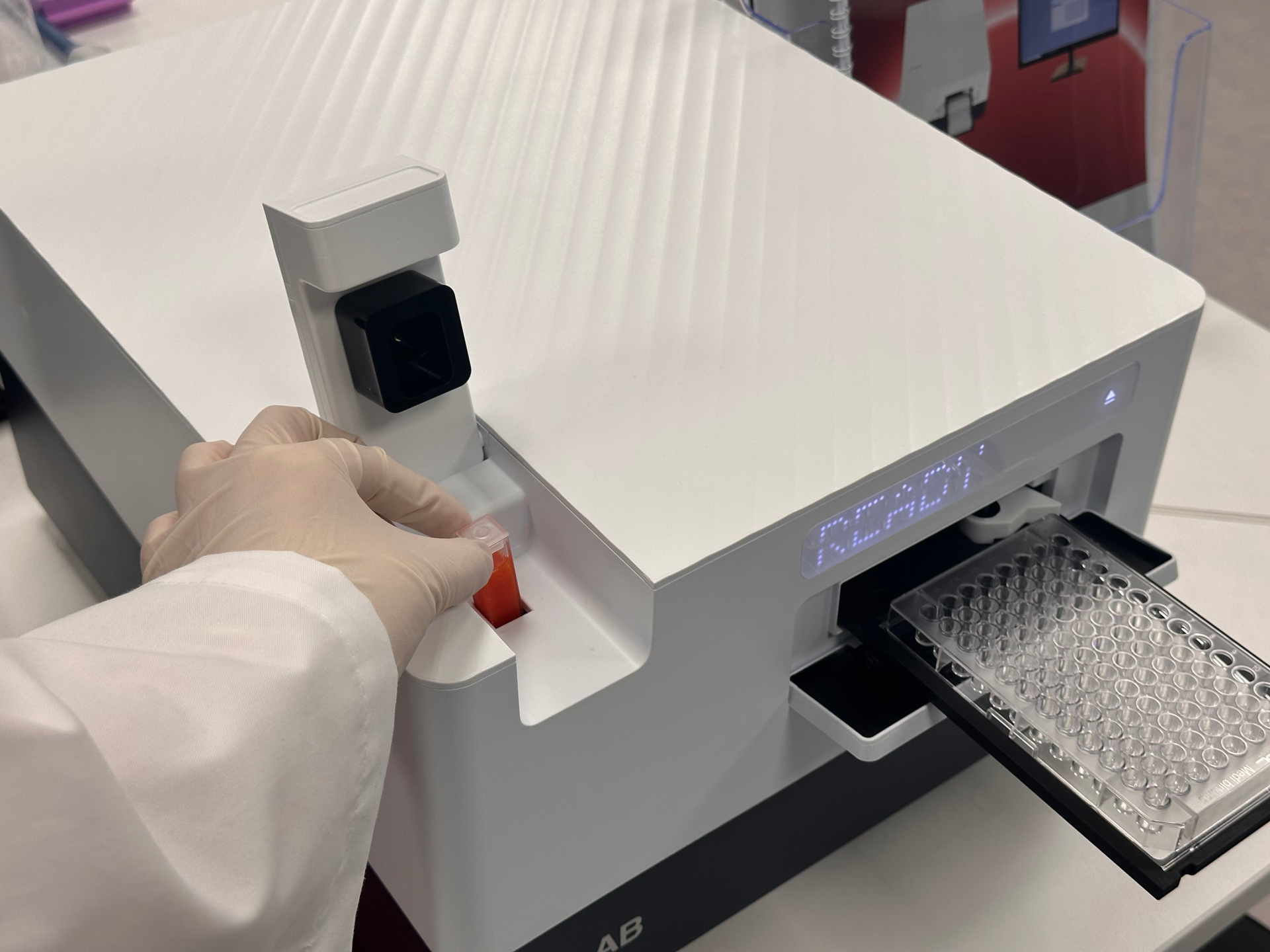
In this application note, the quantitative analysis performance was evaluated for various cuvette types used in the cuvette port of the MRX A2000 (MRC model). Since cuvettes differ in optical characteristics depending on their design and required sample volume, it is important to verify whether concentration–absorbance linearity is maintained under different cuvette conditions for single-sample quantitative analysis. A total of seven cuvettes, including standard, semi-micro, and micro cuvettes, were tested using potassium permanganate as a model sample. Absorbance characteristics were compared over a concentration range of 1.17–150 mg/L. Calibration curves were generated at 540 nm for each cuvette. The slopes of the calibration curves were similar, ranging from approximately 0.0128 to 0.0132, while the coefficient of determination (R²) was greater than 0.9994 for all cuvettes.
Introduction
Cuvettes are available in various designs to accommodate different sample volumes and measurement purposes. Depending on their design, the required sample volume and optical characteristics may vary. Therefore, maintaining stable absorbance and good linearity under different cuvette conditions is an important factor in single-sample quantitative analysis.
In this application note, the concentration–absorbance characteristics of potassium permanganate (KMnO₄) solutions were compared using seven different cuvettes, including standard, semi-micro, and micro cuvettes. Potassium permanganate was selected as a model sample because it shows strong absorbance at 540 nm in the visible region and provides excellent concentration–absorbance linearity, making it suitable for evaluating performance across different cuvette types.
Solutions with concentrations ranging from 1.17 to 150 mg/L were measured at 540 nm. The concentration–absorbance linearity and coefficient of determination (R²) for each cuvette were compared to evaluate whether reliable quantitative analysis could be achieved under identical measurement conditions despite differences in cuvette type and sample volume.
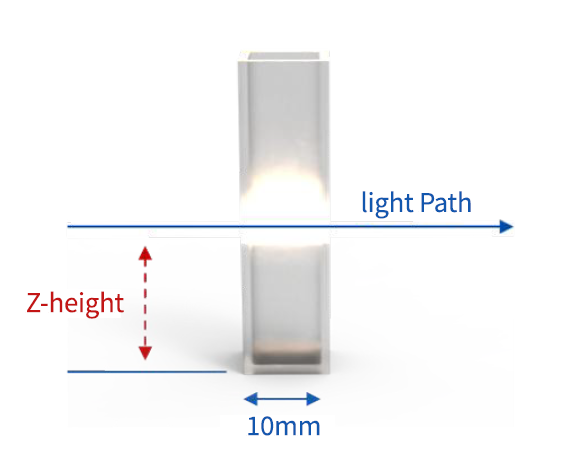
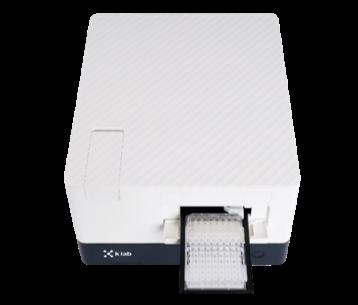
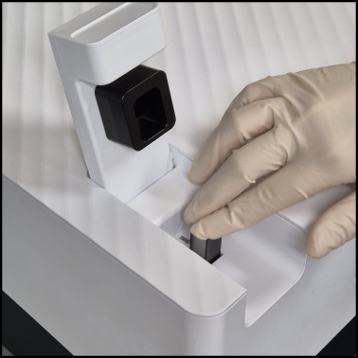
This study was performed using the MRX A2000 (MRC model), a UV-Vis spectrophotometric microplate reader equipped with a built-in cuvette port. In addition to microplate-based analysis, the instrument provides a cuvette port with a 15 mm Z-height, allowing standard, semi-micro, and micro cuvettes to be measured on a single instrument.
In this application note, representative cuvette models that demonstrated stable signal response and good linearity during actual measurements are presented. The results provide practical guidance for MRX A2000 users when selecting a cuvette according to sample volume and experimental requirements.
Sample Preparation and Experimental Methods
Sample Preparation
A potassium permanganate stock solution (1,000 mg/L) was prepared by dissolving 0.2511 g of potassium permanganate (CAS No. 7722-64-7, CAT No. 6607-4405, DAEJUNG) in distilled water and diluting to a final volume of 250 mL using a volumetric flask.
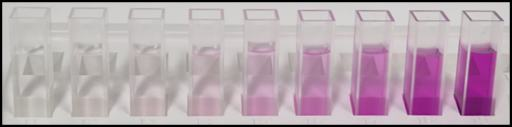
The stock solution was then diluted to prepare a 150 mg/L potassium permanganate solution. Subsequently, a 1:2 series dilutions was performed to obtain solutions with final concentrations of 1.17, 2.34, 4.69, 9.38, 18.8, 37.5, 75, and 150 mg/L.
Measurement Wavelength Selection
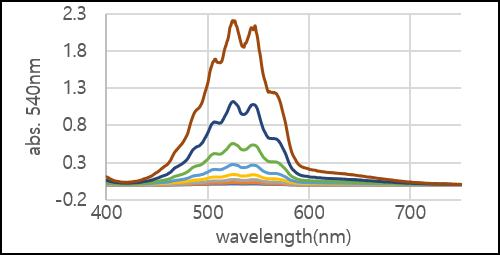
To determine the absorbance characteristics of potassium permanganate solutions, absorption spectra were measured over the concentration range of 1.17–150 mg/L using the [Spectrum] mode of the MRX A2000. A Ratiolab 2811110 standard cuvette was used for all spectral measurements.
The spectral analysis showed a distinct absorption peak near 540 nm in the visible region. At this wavelength, absorbance increased in a stable and consistent manner with increasing concentration.
Based on these results, 540 nm was selected as the measurement wavelength for quantitative analysis in this study.
Cuvettes Used in the Study
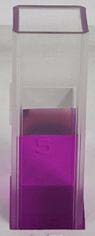
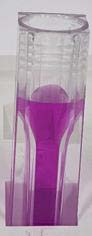
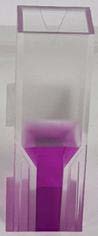
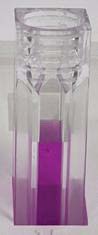
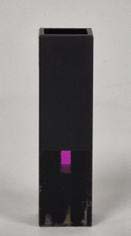
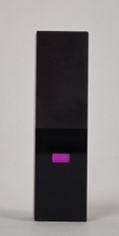
The cuvette types, manufacturers, and sample loading volumes used in this study are summarized in Table 1. A total of seven cuvettes, including standard, semi-micro, and micro cuvettes, were selected for evaluation. These cuvettes demonstrated stable signal performance during measurements under the 15 mm Z-height condition of the MRX A2000 cuvette port.
Table 1. Models, manufacturers, and sample loading volumes of the cuvettes used in this study.
| Cuvette Model | 2811110, standard cuvette | 7591-70, standard cuvette | 01940-00, semi micro cuvette | 2810100, semi micro cuvette | 01938-00, semi micro cuvette | 16.100/Q/10, micro cuvette | 16.4.2/Q/10, micro cuvette |
|---|---|---|---|---|---|---|---|
| Cuvette Image | 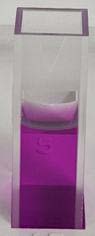 |
 |
 |
 |
 |
 |
 |
| Manufacturer | Ratiolab | Kartell S.p.A | Kartell S.p.A | Ratiolab | Kartell S.p.A | Starna | Starna |
| Sample Volume(µL) | 2500 | 2500 | 1000 | 1000 | 1000 | 100 | 80 |
Results
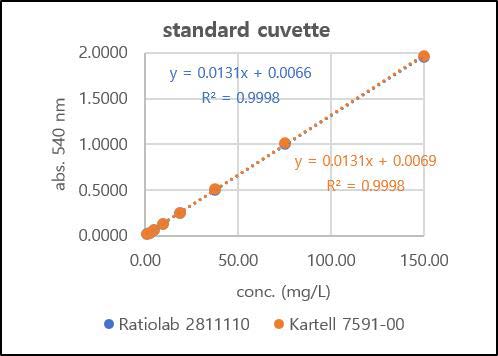
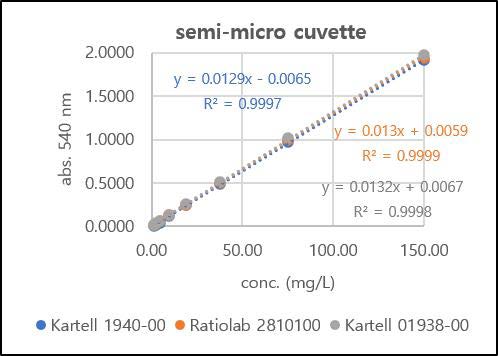
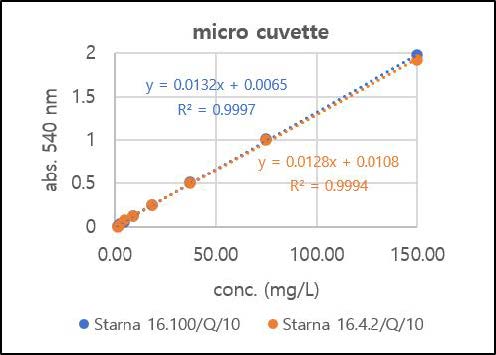
As shown in Figure 5, all seven cuvettes, including standard, semi-micro, and micro types, showed a linear increase in absorbance with increasing potassium permanganate concentration over the range of 1.17–150 mg/L at 540 nm.
The slopes of the regression lines were similar across all cuvettes, ranging from approximately 0.0128 to 0.0132. In addition, all cuvettes showed excellent linearity, with coefficients of determination (R²) greater than 0.9994.
Conclusion
The MRX A2000 (MRC model) maintained excellent linearity with an R² value greater than 0.9994 over the concentration range of 1.17–150 mg/L (approximately 2 Abs.) for potassium permanganate solutions, regardless of whether standard, semi-micro, or micro cuvettes were used in the cuvette port.
The regression slopes were highly consistent among all cuvette types, ranging from approximately 0.0128 to 0.0132. These results confirm that the MRX A2000 can be reliably used for quantitative analysis of single samples regardless of the cuvette type selected.